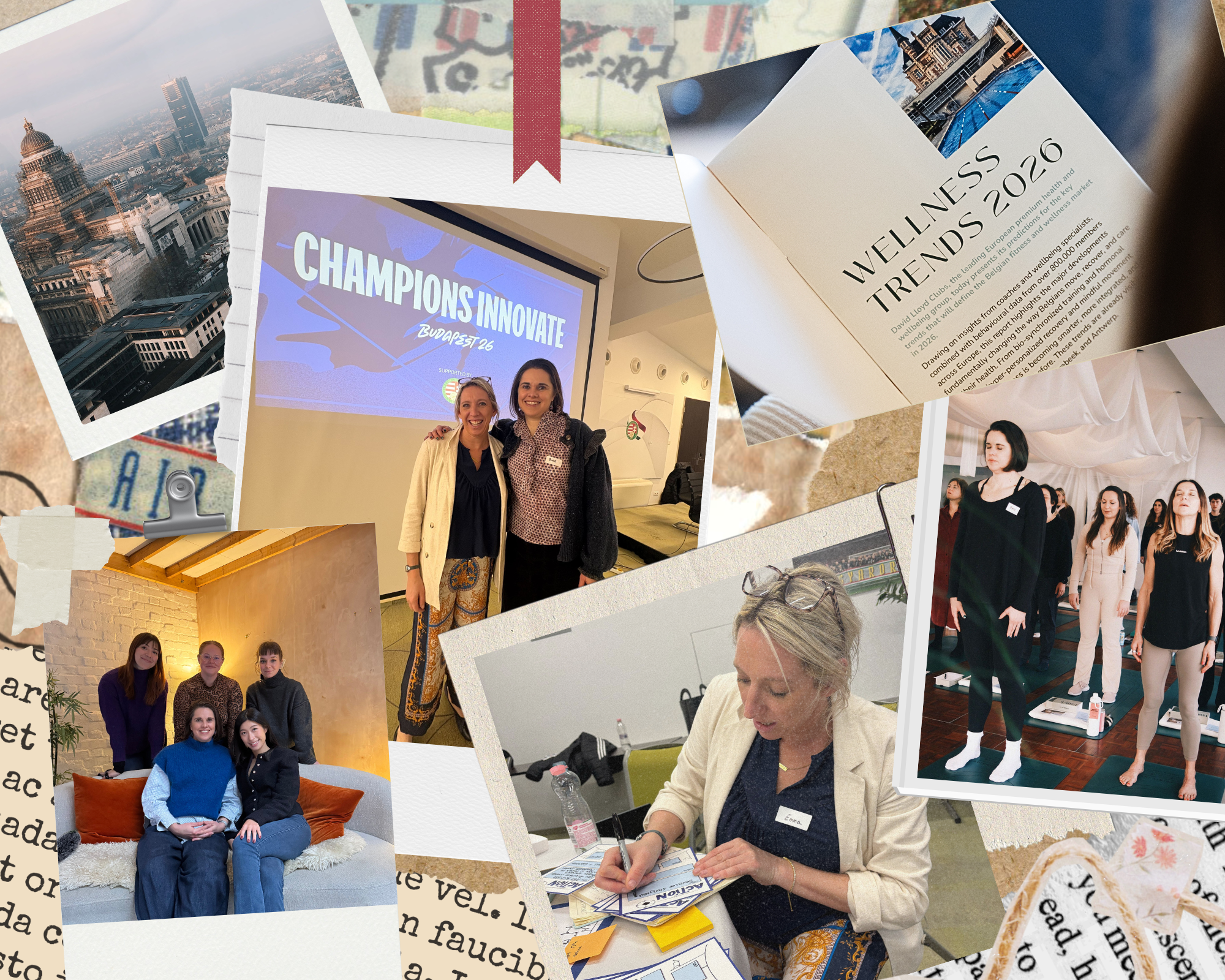
Hey Jude, Do the Brussel, My House in Budapest …
Don’t worry – the pun whimsy’s over and the copywriter’s been scolded. TBH we haven’t had time to indulge in clever(ish) puns given the mega-pace-start of 2026.
Par example, or something, we had our debut filming session with women’s health up-and-comers Jude ahead of a multichannel activation on the pelvic floor and beyond. Oh and a cool note of trivia: it can take, in our industry, like years to finally come to terms with a new partner, but with Dragon’s Den alum Peony Li it was done and dusted in no time. Love it.
Moods remained high despite Baz’s Blue Monday trip to Brussels (no musical puns intended promise. Promise. Please don’t hit me again) for a David Lloyd wellness event some 27-stories above the centre of the city.
After a day or two of networking, panels and presentations, Baz took time to work on her own wellness, including an impressive Tina T breathwork session.
Now, what to do when the puns run out. Who’s Hungary?
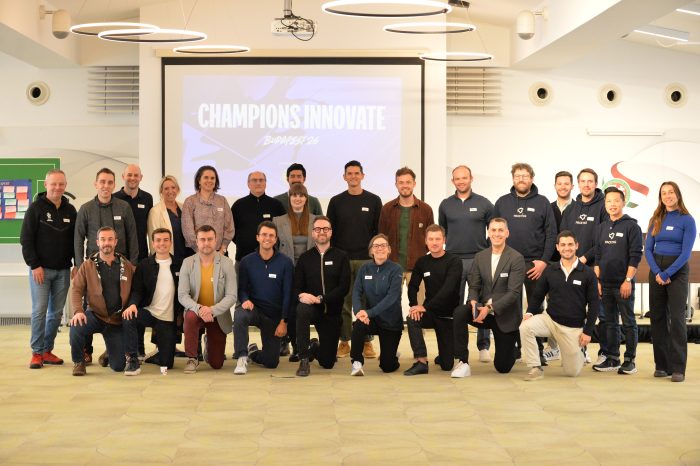
The Well HQ on-board for yearlong UEFA project
Crowd-sourcing so we can report what matters to you
Click on over, cast your vote and we’ll come back on issues raised next time.
Menopause and the midlife collision – a double-whammy
In the first of two pieces on menopause, this excellent PhD thesis from Katrina Wood reports on the many ways menopause can’t help but be worsened by “problematic systems and structures”.
Another way to say it is that when menopause comes along it, women suffer doubly due to gaps, craps and inequalities in the system at large. Essentially, sociocultural shortcomings are basically menopause symptoms in their own right.
In the spirit of change the things you can, this thesis shows that we need to reposition how we explain menopause, focusing a little less on the internal / physiological and a little more on the external / societal.
Secondly, and still on menopause, a 2025 study by Hamilton et al discovered that even highly active women experience menopause and its physical symptoms in similar ways to the rest of the population.
Top menopause symptoms among female endurance athletes included sleep problems (88%), sexual problems (74%), anxiety (72%), hot flushes (65%) and joint / muscle pains (63%).
The takeaway is that no one is immune. Coaches (and athletes themselves) need to acknowledge that the struggle is no less real or acute even for super healthy midlife women. Commensurate practices and training loads may be required.
Do you think menopause has social & cultural symptoms?
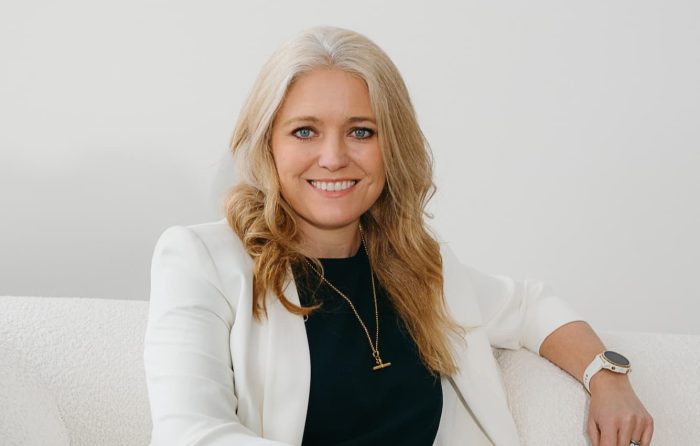
Dr Bella says: Totally. Physiologically, menopause can be stressful, painful and unsettling but think about what’s typically going on for women at this same time.
When entering perimenopause, many midlife women are at the peak of their career, and / or looking after children, and / or caring for older relatives, and / or running households, and / or … well, the list goes on.
Any one of these roles comes with pressure, yet many midlife women live several (or even all of them) at once. Sprinkle on some social mediatastic ideas that we’re all supposed to be sleek, healthy, happy, fulfilled and the best version of ourselves … and yeah, it’s a whole set of psycho-socio-cultural symptoms to contend with.
A generation or two ago most women weren’t putting in the hours they do today. And while this certainly isn’t a bad thing, it increases the load on women and in turn the load on creaky systems built on yesterday’s standards and (mis)information.
There needs to be more understanding, flexibility and fairness inside businesses, inside families, and inside systems. Menopausal women are dealing with a lot. Lie a lot a lot. And as such need more care, more support and more compassion to ease and navigate pressures and expectations that come with the territory.
Now something you’ll really like
Sign up here to get our next newsletters directly in your inbox
If you have any feedback, complaints or comments please email us at hello@thewell-hq.com
As a reminder, the content of the course belongs to The Well HQ. You have permission to access and use the content yourself or, if you are an organisation, for the number of users selected, but are not otherwise permitted to share such content with others, all in accordance with our Course Terms and Conditions.