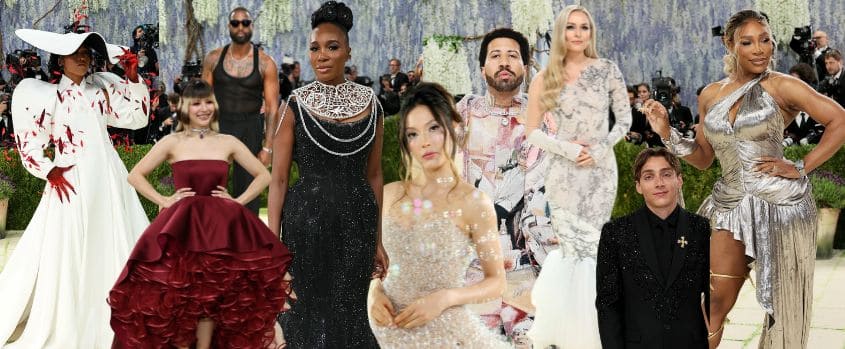
A decade ago, the Met Gala was largely the domain of fashion insiders and Hollywood elites. Today, elite athletes are no longer on the fringes of this culture; they are central to it. Their presence has steadily increased over the past ten years, reflecting a broader shift in the cultural power of sport. Athletes are no longer just sports people, but trend setters and cultural icons – but with this opportunity also comes complex shifting dynamics between performance and marketability.
By last year, that shift at the Met Gala was unmistakable. Figures such as Lewis Hamilton and LeBron James were not just attendees, but key to the organisation of the evening: Hamilton was co-chair, and James was honorary chair. They were joined by a host committee that included Simone Biles, Angel Reese, and Sha’Carri Richardson – a sporting heavy lineup that would have been unlikely a decade earlier. This year’s event continued that trajectory, with Venus Williams taking on a co-chair role.
The Met Gala is famously one of the most exclusive – and expensive – events in the world. Tickets are never released to the general public; instead, every guest must be personally invited and approved by Vogue’s editor-in-chief, Anna Wintour. This year, individual tickets reportedly cost around $100,000, though many attendees don’t pay out of pocket. Fashion houses often purchase entire tables, inviting brand ambassadors and covering their costs. For some athletes, an invite may be prohibitively expensive, especially if they are not dressed by a couture fashion house.
Still, among this year’s standout guests was a notable presence of athletes from the Winter Olympic Games, including Lindsey Vonn, Eileen Gu, and Alysa Liu. Their attendance reflects not only the global cultural impact of the Games but also the powerful and inspiring stories each of these women represents (read more in our other blog). They were joined by basketball stars, American football players, tennis icons and Summer Olympic athletes.
That guest list mirrors the growing global influence of sport itself. Leagues and competitions such as the NBA, the Premier League, and the Olympic Games command vast international audiences, elevating athletes into household names across continents. For some, but certainly not all, sporting success now comes hand-in-hand with celebrity status; with that come endorsement deals, sponsorship opportunities, and invitations to events – like the Met Gala.
And, central to this transformation, is their social media presence. Those athletes that can leverage their story and marketing can turn gold medals into red carpets – and money. Platforms such as Instagram have allowed athletes to bypass traditional media gatekeepers and communicate directly with fans. Footballer Cristiano Ronaldo, for example, has amassed over 670 million followers, giving him a reach comparable to, or even exceeding, that of major broadcasters.
Rugby player and Olympic medallist Ilona Maher, with almost 5.5 million followers, has been vocal about this: “I can’t just play the sport I love. I’m not going to make millions playing rugby, I’m not even going to make six figures playing rugby — that’s the sad truth,” she told the BBC.
Even athletes with smaller followings are now able to cultivate personal brands, engage audiences, and generate income streams that extend beyond their performances or podium finishes.
Yet this increased visibility is not without its challenges. The same platforms that offer opportunity also expose athletes, and in particular women, to new risks. Female athletes face disproportionate levels of online abuse: studies from World Athletics in 2021 and 2022 suggested that female athletes are the victims of 60% to as much as 87% of online abuse and over 40% of that abuse is sexualised or sexist in nature. Alarmingly, another study from Sheffield Hallam University showed that misogynistic abuse targeting sportswomen rose by 44% between 2023 and 2024, highlighting the darker side of this digital empowerment.
These inequalities also extend beyond social media and can often be found rooted in the economic structures of sport itself. Despite progress in bridging the pay gap in some sports – tennis being a notable example – significant pay disparities persist. The New Economy of Sports report from 2023 found that, on average, male athletes earn 21 times more than their female counterparts. As a result, many women in sport are compelled to engage more actively with branding, sponsorship, and public visibility to sustain their careers.
In this context, the Met Gala can teach us something about the evolving demands placed on modern athletes, particularly women, who must navigate the dual expectations of elite performance and marketability.
For those who have the social media and marketing knowledge, they are capable of turning sports performance into a cultural icon and generate opportunities outside of sport. Ultimately, the growing presence of athletes at the event reflects their expanding role as global cultural figures, shaped by digital platforms and worldwide audiences.
Yet, it also exposes the inequalities that persist beneath the surface, where visibility operates as both an opportunity and a risk, especially for women in sport.
If you have any feedback, complaints or comments please email us at hello@thewell-hq.com
As a reminder, the content of the course belongs to The Well HQ. You have permission to access and use the content yourself or, if you are an organisation, for the number of users selected, but are not otherwise permitted to share such content with others, all in accordance with our Course Terms and Conditions.