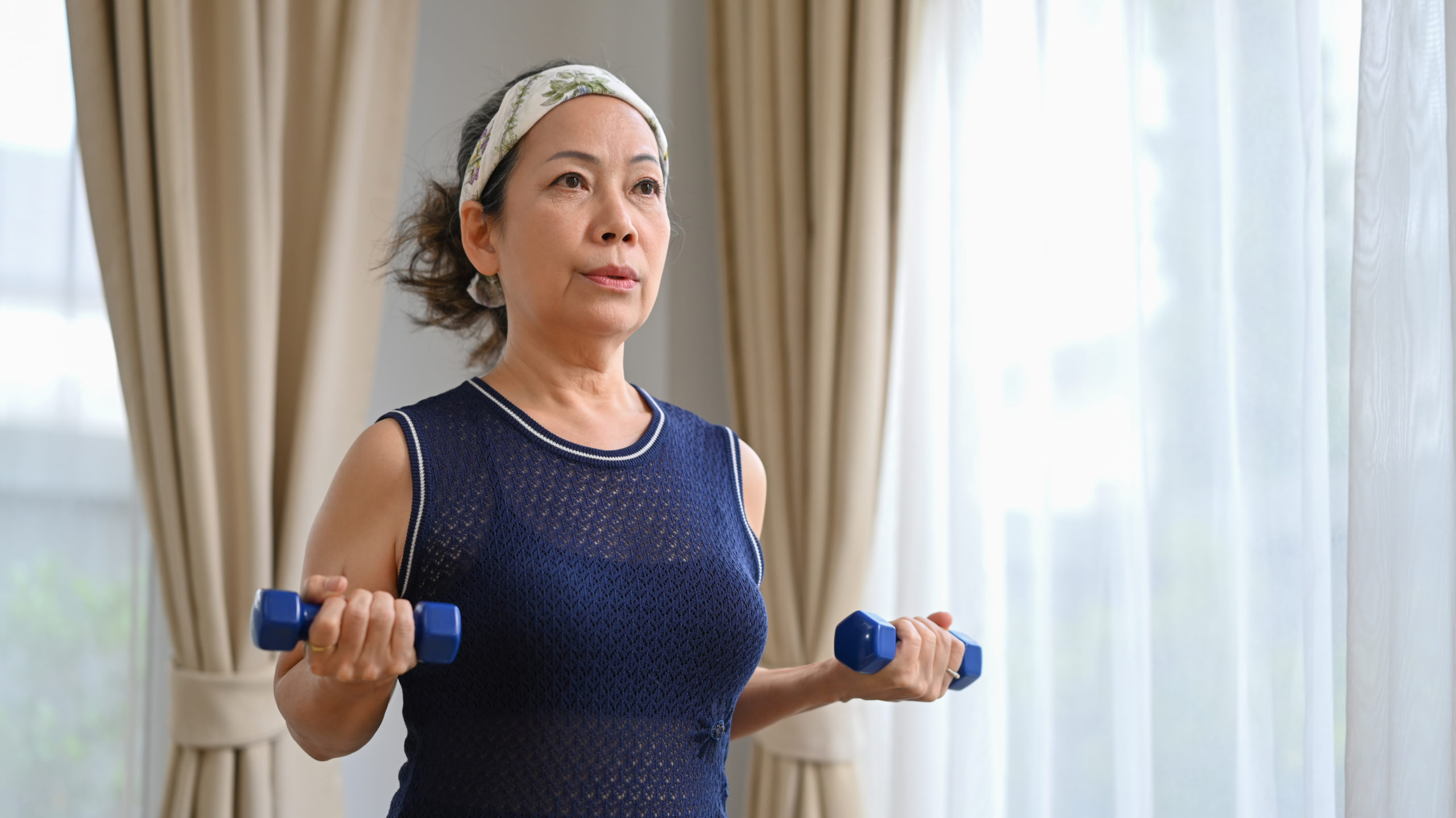
A gateway to better health, mood, sleep and resilience, the midlife benefits of strength training can’t be overstated
Strength training in midlife, as part of a balanced diet of exercise, promotes holistic health, fitness and resilience. It helps sleep, mood and outlook.
At a time in life when muscle gets lost and fat gained. When mood, stress and sleep are in constant flux, broadening out the exercise we do — and focusing again on the fundamentals — will help the midlife body get out from under.
… if we follow a handful of key rules:
<insert video Slider>
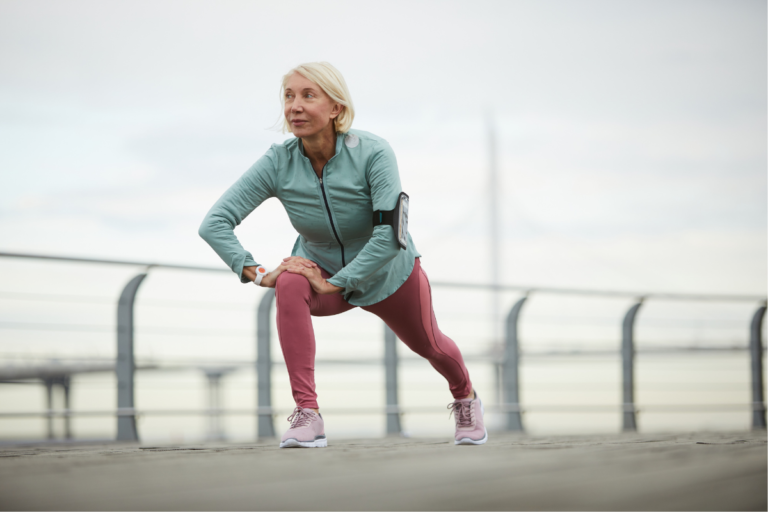
1) The warm up
In our 20s and 30s, many of us try to get away with no warm up but the midlife body needs it. The midlife body — which is more injury prone anyway — does not handle the shock or stress of suddenly jolting into action .
So it’s massively important we do a nice, flowing warm-up to oil those joints and muscles and let the body know: it’s about to be tested.
2) The cool down
A solid warm up, a robust cool-down. Cool-down in midlife means a prolonged and concentrated time for the body to, hormonally as well as physically, come back down to earth.
That means tapping into the parasympathetic (AKA the ‘rest and digest’) nervous system via deep breathing, stretching and, ideally, a tapering off exercise, such as walking home from the gym or training centre.
3) Strength and conditioning
A woman’s muscle mass decreases by 3-8% per decade after she hits 30. Weights, resistance and carefully constructed HIIT sessions help to maintain or increase muscle, which is good for bone health over time, and reducing the risks of serious injury.
But strength and conditioning training does more. It’s shown to reduce anxiety and stress and it keeps torching calories after you’ve finished. Fat loss, muscle gain, body composition – tick tick tick. Studies even show that perimenopausal women with more muscle than fat have up to 70% fewer hot flushes.
4) Hydration
Without adequate rehydration, midlife muscles suffer more pain for longer. Hydration’s role in stress management is considerable, and it also keeps injury and illness at bay.
Hydration – it’s just a good idea.
5) Remember pelvic floor
The midlife pelvic floor is much more susceptible to issues on account of falling oestrogen levels in the pelvic region. The vagina is one of the bigger casualties of declining oestrogen hence dryness, itchiness, pain and atrophy, none of which square with the ideal of comfortable, liberating exercise.
We recommend two minutes of pelvic floor work per exercise session.
This helps us to build up defences and tune into the body so we can identify early warning signs. Leaks and pains aren’t to be dismissed – they’re your body whispering at you to get help. Don’t wait until it’s screaming.
6) Fuel right
Gaining fat and losing muscle, the natural response might be to restrict calories and train harder. But that path doesn’t suit the perimenopausal body.
The midlife body is already flooded in cortisol, or chemical stress. Extreme exercise (with or without adequate fuel) causes stress in an already stressed body. The body’s unable to break all that stress down so it goes into survival mode and converts stress to fat.
A weight/ fat control strategy in midlife can quite easily turn into a weight/ fat gain strategy so we have to fuel sensibly and give the body what it needs.

If you have any feedback, complaints or comments please email us at hello@thewell-hq.com
As a reminder, the content of the course belongs to The Well HQ. You have permission to access and use the content yourself or, if you are an organisation, for the number of users selected, but are not otherwise permitted to share such content with others, all in accordance with our Course Terms and Conditions.