Equality, fertility, innovaty, babbity boo boo dawwwww …
1. Working Well
And lastly …
If you missed our late October newsletter you won’t know that Emma and Gabriella chunnelled to Lille to see innovation, Decathlon style. We won’t step on that email too much (click) ‘cept to say that the retailer is, with a little help from its friends (hello), asking incisive, step-change questions like why. What a trip.
In other big October newsies, our Dr Emma brought TWHQ’s mission, and some of the pertinent problems and solutions therein, to the Parliamentary Equalities Committee for a session exploring barriers to participation and the gender gap in sports and exercise research. Emma, who had a son in-tow, was particularly impressed with session Chair Sarah Owens.
Lastly (not lastly) we practice what we preach here. After pioneering several Female Athlete Health Lead programmes with a clutch of UK NGBs, our pro-ro-rower-in-residence Juliette just became one at the UK Sports Institute. Oh and lastly (not even close) our Guided Coaching Programme is landing so well that we’re already, a couple of months in, hearing about real impact in real sports. In fact, we’re launching another cohort in Jan 2026, focused on Puberty.
Click here to join the pre-sale list (for early access and 20% off when time comes.
And lastly (nope still not lastly), newstart Jo hit the ground running with a talk at the Equal Game conference and an appearance at British Cycling HQ as the latter unveiled their female health strategy and put topics such as fertility and REDs high on the agenda. Good to see.
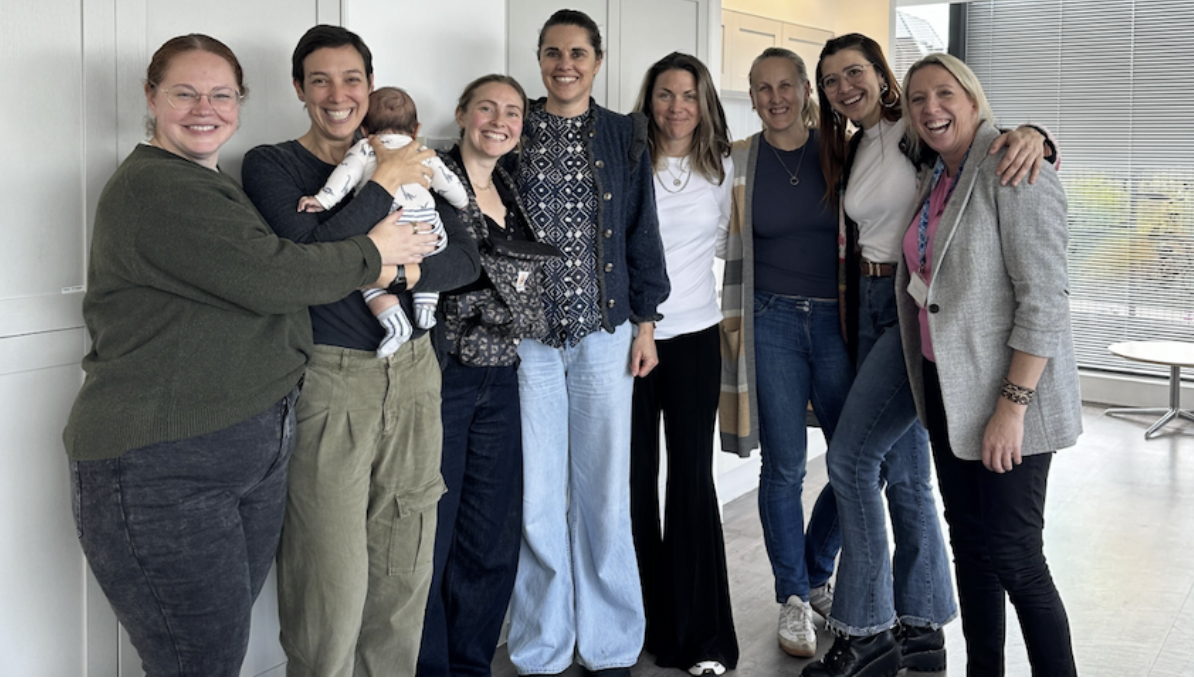
Lastly (yes lastly) Tamara popped in to say hi with a little bundle in her arms. For obvs reasons we won’t give too much away but mum and baby are doing brilliantly, and once Sophie finally uncuddled wee baba the pair were allowed to leave.
2. The World at Well
The oldest story ever told
A big time accusation recently did the rounds, suggesting that, as woman’s sport ascends, a small handful of powerful people are cashing in while systems are being shorted on the investment they need to make commensurate impact.
We hear you. It was ever thus. From our experience working with grassroots systems it sure seems like investment stops trickling past (at best) the system’s upper echelon. The elite get a share but after that it’s gaps galore.
It’s sad to think a cynical few are making bank at others’ expense, and what a great tee-up for a recent report that some men are betting big on women’s sport. Hang on you say – that’s not news. Well, no it wouldn’t be if women’s menstrual cycles weren’t a key variable being loaded into gambling chatter, decisions and algorithms. Yep …
The best / worst part is the fallacy of it. It’s a flawed assumption to gamble on a female athlete’s performance based on her menstrual cycle. It isn’t an exact science in one woman, month to month let alone woman to woman. Also, women can perform perfectly well on their period as we scienced you with in April.
Offensive, scandalous, invasive. All considered, aren’t you just a little pissed off?
3. 550 positive vibes
David Lloyd review smashes expectations
What do 550 pieces of positive feedback have in common? All concerned workshops given by new Female Health Leads at David Lloyd clubs.
As you know, we’ve been supporting David Lloyd health clubs since late 2024, training up Female Health Leads to ensure qualified people support women on gym floors, and represent the business vision of leading in women’s health.
And see above. As far as gym-goers are concerned, those FHLs are crushing it.
Several cohorts and hundreds of FHLs later, David Lloyd is currently rolling the project out across 100+ clubs in seven European countries. It’s hugely promising and we’re glad TWHQ are in talks to extend our partnership into next year.
4. Here Comes the Science Bit
Sigh as science signposts knowing / doing gap
Nowadays when female athletes get injured it usually attracts much media attention, most of which is negative. Why is this happening. This shouldn’t be happening. Why aren’t we doing more. Are women too frail? Yabba Dabba Doo.
But the real story isn’t ever as juicy. Solid information is already out there showing that when women complete programmes to hone their agility, strength, balance, acceleration and deceleration then injury levels are very effectively reduced.
Unfortunately 1) Too few do these programmes. 2) Programmes vary in quality. 3) Programme teachings aren’t enforced (well). 4) Athletes aren’t given sufficient feedback and cues to perform exercises optimally and turn learnings into habits.
And so on and on. As if to double down on the theory, two 2025 reviews (Lin et al and Bullock et al) have again found that training such techniques well, consistently and repeatedly brought significant improvements to injury rates.
Injuries are always multifactorial, but controlling the controllables can be massively empowering for athletes. To raise the floor, better practices need to be taught regularly and repeatedly, and embedded younger so that athletes, or indeed active women in general, can hardwire resilience into their technique now and forever.
5. Medical BS
Should menopause conversations be mandatory at UK GPs?
Dr Bella says: Absolutely. It was recently announced that menopause questions will now feature in routine NHS health checks for 40+ women in England. Not only could this be helpful to millions, it’s a breakthrough (albeit several generations late) whereby we can finally pulverise a longstanding taboo and, as a matter of policy, shed light on an experience almost every woman will have.
Wonderful. Yes. But. There’s been precious little on how the initiative will be funded, or implemented, or maintained. We need to remember that menopause isn’t a paint-by-numbers thing; each woman experiences symptoms (or not) differently, and the impact of symptoms — mental, physical, emotional — can hit in a multitude of ways.
I weave hormones into almost every consultation because they’re so fundamental in how we think, feel and be through every lifestage. Even where symptoms are absent, or at least invisible, it’s still crucial GPs have these conversations.
So yes this is progress, but it demands to be done properly; with the right info, processes and support frameworks in place. If it’s rushed or crowbarred into the remits of busy NHS staffers then we’ll get more confusions than conclusions …
And that ain’t far from where we are right now.
If you have any feedback, complaints or comments please email us at hello@thewell-hq.com
As a reminder, the content of the course belongs to The Well HQ. You have permission to access and use the content yourself or, if you are an organisation, for the number of users selected, but are not otherwise permitted to share such content with others, all in accordance with our Course Terms and Conditions.